Magic: The Gathering is not only the oldest collectible card game in history, but also one of the deepest and most rewarding. If you are starting out, it is normal to feel overwhelmed at first by the number of rules, mechanics, and card types. But don’t worry: here we explain step by step how to play Magic so you can play your first games with confidence.
What do you need to play?
To play a game of Magic you need very little material:
- A deck of at least 60 cards (there is no maximum, although 60 is recommended).
- A way to keep track of each player’s life. Usually you start with 20 points.
- Markers for counters, tokens, or any effect that requires them (you can use dice or coins).
- An opponent with their own deck.
Unlike other TCGs, in Magic there is no fixed board: each player has their own battlefield, graveyard, hand, library, and exile zones. The table can grow a lot during the game, especially in long formats like Commander.
Card types in Magic
Before casting your first spell, it is important to know the main card types you will find in a deck.
Lands
Lands are the foundation of everything. They provide mana, the resource you need to play any other card. Each turn you can play one land face up from your hand, and that land can be “tapped” to generate mana of the corresponding color.
- Plains: generate white mana.
- Islands: generate blue mana.
- Swamps: generate black mana.
- Mountains: generate red mana.
- Forests: generate green mana.
There are also nonbasic lands that can generate more than one color or have special abilities, but to start with a simple deck it is best to focus on the five basic lands.
Creatures
Creatures are your allies on the battlefield. They have a mana cost, power, and toughness. When they attack, the opponent can block them with their own creatures. If a creature receives damage equal to or greater than its toughness, it dies and goes to the graveyard.
Some creatures have special abilities like flying, haste, vigilance, reach, or deathtouch, which change the way they interact in combat.
Spells
Spells are one-time-use cards that resolve and then go to the graveyard. They are divided into several subtypes:
- Instants: can be played at any time, even during the opponent’s turn.
- Sorceries: can only be played during your own main phase.
- Enchantments: remain on the battlefield and generate continuous effects.
- Artifacts: objects with varied abilities that are usually independent of color.
- Planeswalkers: special characters with loyalty and activatable abilities.
Other cards
There are also Planeswalker, Battle, World Enchantment, Legendary Artifact cards, and other advanced mechanics, but as a beginner you don’t need to master them from day one.
The five mana factions
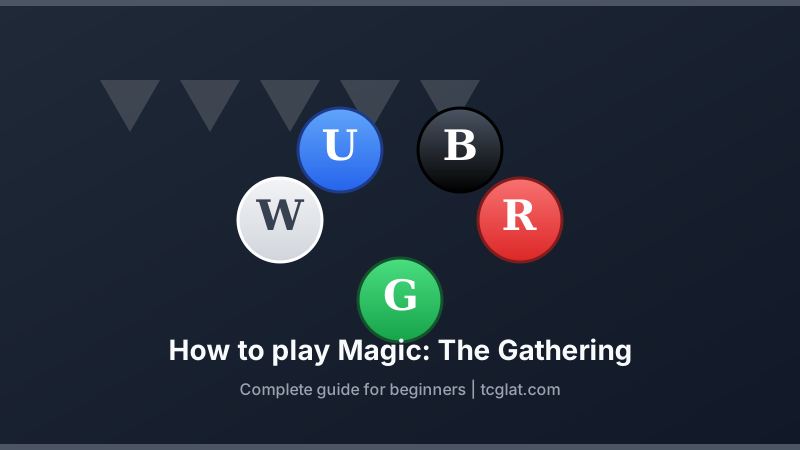
The color system is one of Magic’s hallmarks. Each color represents a philosophy and a playstyle:
- White: order, healing, small creatures, protection.
- Blue: control, counterspells, card draw, flyers.
- Black: sacrifice, removal, vampirism, reanimation.
- Red: direct damage, aggression, speed, destruction.
- Green: mana growth, large creatures, natural fight.
Many decks combine two or more colors to take advantage of each one’s strengths. For example, Blue-Black is known for control and manipulation, while Red-Green is usually aggressive and based on large creatures.
Turn phases
Understanding the turn is fundamental. Each turn in Magic is divided into five main phases:
- Beginning phase: tapped cards untap, you draw a card, and maintenance effects are checked.
- Precombat main phase: where you play lands, cast spells, and prepare your creatures.
- Combat phase: you declare attackers, the opponent declares blockers, and damage is resolved.
- Postcombat main phase: a second opportunity to cast spells and creatures.
- End phase: pending effects resolve and the turn passes to the opponent.
During certain phases, especially in combat, both players can play instants and activate abilities. This interactivity is what makes Magic so exciting and complex.
How to win a game
The most common way to win in Magic is to reduce the opponent’s life points to zero. However, there are other ways to win:
- If a player must draw a card from their library and it is empty, they lose the game.
- Some cards have special win conditions, such as accumulating certain counters or completing objectives.
- In some formats, poison or commander effects can alter the win conditions.
To win, you need to balance your strategy between reducing the opponent’s life, protecting your own, and managing your mana resources efficiently.
How to build your first deck
If you are starting out, the most recommended option is to buy a preconstructed deck or Planeswalker Deck. These decks come ready to play and allow you to learn the mechanics without worrying too much about construction.
When you feel comfortable, you can try building your own deck following some basic rules:
- Use exactly 60 cards for greater consistency.
- Include between 22 and 26 lands, depending on the average cost of your cards.
- Keep a balanced mana curve: don’t only include expensive cards.
- Define a clear strategy: are you going to attack quickly? Control the game? Win with large creatures?
- Don’t mix too many colors at first. Start with one or two.
Remember that the key is not to have the most expensive cards, but for your deck to work coherently. A cheap but well-built deck can beat much more expensive decks.
Tips for beginners
- Don’t play all your lands at once: one land per turn is the usual pace, but think about which color you will need later.
- Read your opponent’s cards: understanding what each card does is as important as knowing your own.
- Take advantage of the stack: many effects in Magic resolve in reverse order. Learning to use it gives you a great advantage.
- Save removal for real threats: don’t spend your best spells on small creatures unless necessary.
- Play, play, and play: there is no better way to learn than practice against different opponents.
Conclusion
Magic: The Gathering may seem complex at first, but once you master the basic concepts, you will discover an enormously rich and fun game. You don’t need to know everything to start: with a preconstructed deck, a few games, and this guide, you already have everything you need to enter the multiverse of Magic.
At tcglat we will continue publishing guides, format analyses, and strategies to help you improve your level. In the meantime, shuffle your deck, summon your first creature, and start enjoying the most legendary card game in history.